

Artificial Intelligence (AI) in cybersecurity improves detection of threats as well as incident response as well as automation of security by analyzing huge amounts of data in real time.
AI assists in detection of cybersecurity threats such as malware ransomware malware phishing attack and other abnormalities more quickly than conventional methods.
The primary advantages of AI driven cybersecurity comprise threat intelligence automation as well as behavior analytics risk analysis intrusion detection and active threat hunting in order to reduce cybersecurity threats.
AI is widely used in endpoint security firewalls Security Information and Event Management (SIEM) as well as extended Detection and Response (XDR) as well as fraud detection systems to improve security of networks cloud security cloud security as well as security of data.
The cyber threat landscape is constantly changing AI powered cybersecurity tools provide 24/7 security monitoring quicker incidents response as well as improved security measures which means that enterprises must enhance their cybersecurity strategies stronger.
Why is it that we need AI in Cybersecurity?
AI plays an important role for cybersecurity as it enhances security by enhancing threat detection prediction and ability to respond.
It analyzes vast quantities of information to find anomalies and patterns anticipates possibility of cyber attacks performs specific security processes and responds to threats instantly. It can help strengthen defenses as well as reduce risks and guard against emergence of cyber related threats better.
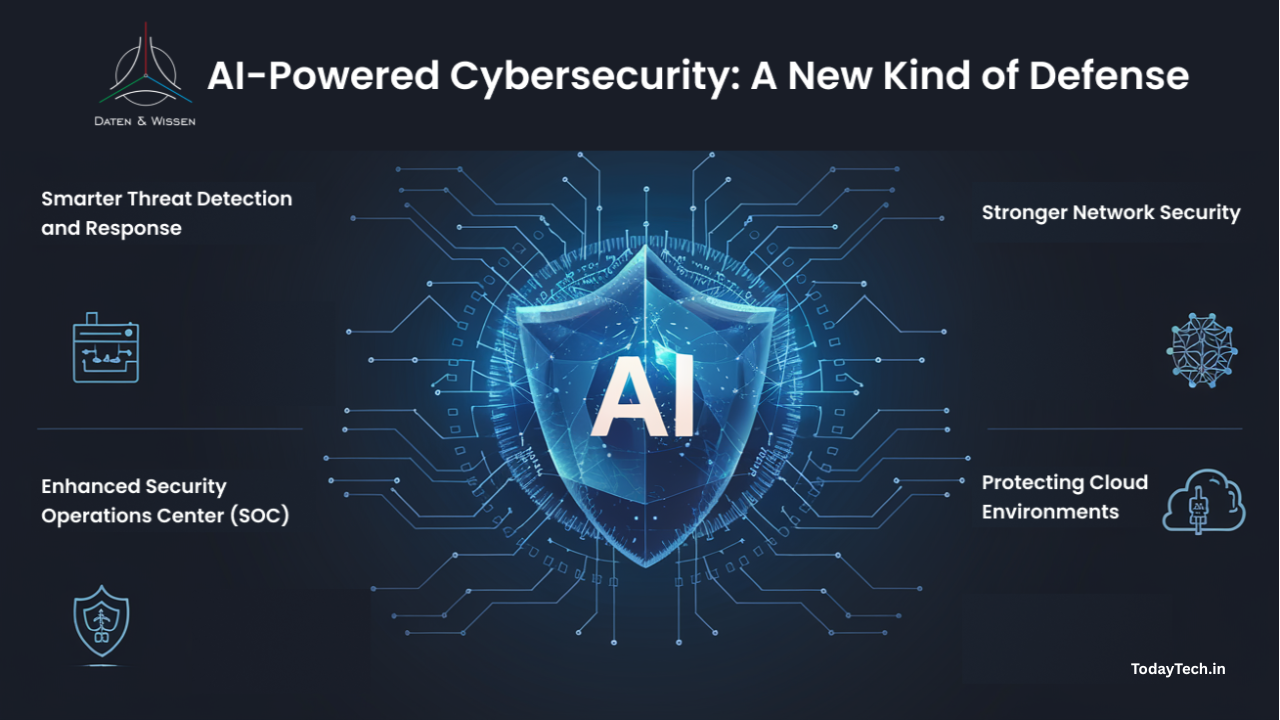
How AI Works in Cybersecurity?
Artificial Intelligence in cybersecurity is like presence of smart dog which can adapt and learn to new techniques in order to safeguard your home from burglars. Well break it down into simple pieces:
- detection: Imagine that you own your pet dog who is aware of scents of relatives. In same way AI in cybersecurity learns to detect patterns within data in order to spot possibility of dangers. For instance it could identify unusual activity like series of unsuccessful login attempts or suspicious downloads of files.
- Forecast: Just like how skilled security guards know next time burglars are likely to strike AI algorithms can analyze information to anticipate possibility of cyber attacks prior to they occur. They accomplish this through looking back at data from past and identifying patterns that may suggest potential cyber attack.
- Modification: Your smart guard dog is taught by experience of others. If it detects change in approach burglars are using to break into your home it adjusts its behaviour to defend your house. Similar to that AI systems in cybersecurity are able to evolve with time gaining knowledge from previous events to increase their capacity to identify and stop possibility of future threats.
- Automation Imagine having an automated security system which can detect threats in way that is automatic. AI can be used in cybersecurity to automatize certain tasks such as blocking suspect IP addresses as well as quarantining malware infected devices freeing human security specialists to concentrate on more complicated problems.
- response: When your guard dog spots danger and barks it alerts you. In same way AI in cybersecurity can send alerts and take actions to stop threats immediately and help to reduce effect of cyber attacks.
Top 7 Uses of AI in Cybersecurity
1. Enhanced Threat Detection & Analysis
- AI algorithms are able to process data on an enormous scale that comes from variety of sources at same time and point potential cyber attacks by finding patterns and anomalies.
- The algorithms in machine learning can be used to continuously learn about new data to improve accuracy of detection as well as follow speed of cyber threats advancement.
- Artificial Intelligence based platforms that can be used to detect threats can help discover different outcomes from various sources in order to provide comprehensive and current information about risk.
2. Automated Incident Response (AIR)
- AI will streamline initial response to security threats by automating investigation and response. AI can increase security timeframes by speeding up detection and resolving of risks.
- Thanks to machine learning technology AI software can be able to take into consideration necessity and parametrizity of alerts as they work. employees will be freed from pressure of reviewing hundreds of alerts. In turn this they can concentrate on areas of increased involvement.
3. Enhanced Security Risk Assessment
- AI technologies allow you to create system that is deeper intelligence driven analysis of total IT structure applications and information. In turn system provides information on all security threats and weaknesses.
- By using sophisticated analysis performed using machine learning algorithms security professionals can determine as well as degree of impact of potential security incidents. companies will be able to target their security efforts to most significant security incidents.
4. User Behavior Analytics (UBA)
- Utilizing AI algorithmic techniques actions of user is analysed based on pattern of usage which can identify any abnormal behavior thats not normal usage and could be an insider risk or unauthorized access.
- Artificial Intelligence algorithms are able to detect particular patterns of behavior around lambda times as well as localities and access ways across multiple dimensions.
- UBA solutions allow businesses to identify any ambiguity regarding employee access to knowledge via auditing software that in turn decreases risk of data leaks as well as insider risk.
- AI is becoming increasingly used in conjunction with management of incidents
5. Malware Detection and Prevention
- AI powered malware scanning systems effectively match patterns of particular file including attributes of file and its behavior which means they can recognize malicious software more accurately.
- In analyzing and monitoring various samples of malware machines learning algorithms could discern patterns between previously unknown variants of malware as well as their traits and behavior which may be same way as known malware threats.
- Artificial Intelligence driven programs from Watch Points may place different kinds of endpoints into quarantine or even automatically remove them whenever it determines that devices have been infected in order to stop spreading malware within network.
6. Phishing and Email Scam Detection
- AI algorithms can examine contents of emails and senders behaviour as well as other information that allow them to identify fraud as well as email fraud attempts.
- Modern ML models detect hidden indicators such as an untrusted sender and attachments or domain name included in e mails which aid in identifying message to be one of scam .
- AI based Email security tools come with inbuilt technology for blocking and quarantining advanced email messages that block viewing of fake phishing email which means that chance of successful attempts to phish is dramatically diminished.
7. Vulnerability Management and Patch Prioritization
- AI assists in identifying more probable potential exploitation spots and to determine impact it has for companys safety posture.
- Machine learning algorithms can be utilized to analyse past data as well as feeds of threat intelligence to find list of crucial vulnerabilities that need to be repaired quickly.
- AI fully integrated vulnerabilities control and patches software can be used to track vulnerabilities patching process and facilitate it with help of AI powered vulnerability management platforms. are able to automate patches management applications based on prioritization schedule. It will limit your vulnerability time to known vulnerabilities.
Significance Of Artificial Intelligence(AI) in Cybersecurity
Artificial Intelligence (AI) can be described as revolutionary technology which has changed cybersecurity by improving detection of threats their prevention and response mechanism. Contrary to conventional security methods AI makes use of machine intelligence deep learning and natural process of speech to identify and limit cybersecurity threats instantly.
- Automatic Threat Detection AI detects cyber attacks including ransomware malware and Phishing before they do damage.
- Proactive Defence Mechanisms AI powered software simulates hackers behavior to find vulnerabilities in systems.
- Reduced Human Dependency AI is able to automate routine security functions allowing experts to concentrate on most critical aspects of threat management.

Real Life Example of AI in Cybersecurity
There are numerous real world instances of AI employed to fight cyber attacks. These are just few Example that illustrate use of AI in Cybersecurity can be described like this:
- Phishing detection :AI can be utilized to analyse emails and detect phishing attempts. AI based systems are able to analyze emails traits including address of senders email as well as language used as well as speed of delivery in order to identify if message is fraudulent and designed to steal data. Businesses such as Barracuda Networks use AI to stop phishing attacks by studying characteristics of emails and users behaviour.
- Anomaly Identification :AI can continuously examine network traffic for abnormal behavior that could indicate possibility of cyber attack. In process of analyzing huge quantities of information AI can recognize patterns that are not typical and allows for prompt warning of threats. Like for instance Darktrace is company that makes use of AI to spot abnormalities in network which could signal possible threat allowing organizations to respond to security threats more quickly.
- Automated Threat Hunting :Security teams are frequently overwhelmed with work. AI could automate task hunting by scanning networks to identify suspicious activities. AI systems AI machines can search through mountains of information to discover hidden presence of malware or indications of unauthorised access leaving security professionals to concentrate on other crucial tasks.
- Users and Entities Behavior Analytics (UEBA) :AI can analyze user behaviors to detect security threats from inside or compromised accounts. In analyzing normal activity of users AI can flag deviations which could signal suspicious behavior thereby preventing loss of data or to thwart attempts at hacking.
- Analyzing Malware :The ever evolving nature of malware is challenge to keep security signatures that are traditional up to date. AI is able to analyze malware samples to detect variations that are new and create better security measures.
Application of AI in Cyber Security
Artificial Intelligence is revolutionizing cybersecurity by helping to identify block spread of threats and resolving them faster than conventional methods. Security solutions powered by artificial intelligence use principles of machine intelligence learning and behavioral profiling as well as automation to tackle cybersecurity threats that are adaptive.
- Threat Detection and Forecast : AI detects unusual patterns at moments notice and then blocks potential attacks.
- Incident Response is system that automates attack mitigation process which reduces response time and also minimizing harm.
- Phishing & Fraud Prevention : Finds out if fraudulently generated funds transfers and emails using precision.
- Malware & Network Security : AI supplements firewalls and anti virus programs with study of files activity as well as behaviour of network.
Challenges and Considerations of AI in Cybersecurity
Although AI can provide robust set of tools to help with cybersecurity it is not without its own set of problems and concerns. Below are key things to remember:
- The quality of data and bias AI algorithms can only be just as effective as information theyre trained with. Incomplete or biased training data could lead to biases in AI models that are unable to detect some threats or even flag up harmless actions.
- Transparency and Explainability: AI models may be complicated which makes it hard to comprehend how they come to their conclusions. lack of transparency could cause problem in trusting security alerts generated by AI and hamper efficient response strategies.
- Adversarial Attacks Cybercriminals may make use of weaknesses that exist in AI models to carry out specific attacks. In particular they could alter data in order to fool AI detection mechanisms. Businesses must be aware of such tactics and take appropriate security measures to minimize such risk.
- Privacy concerns: AI powered cybersecurity typically requires collection and analysis of huge volumes of data which can cause privacy issues. It is essential for organizations to ensure that they have adequate data governance policies implemented to safeguard user privacy while using AI to enhance security.
- Human Expertise is Still Essential: While AI automates some tasks human experience remains indispensable for cybersecurity. Security analysts must be able to interpret AI results take critical choices and manage security plan overall.
- Skills based Workforce Shortage implementation and maintenance of efficient AI security systems requires special abilities. Its currently lack of cybersecurity specialists who have required expertise in AI.
Future of AI in Cybersecurity
Innovations of Artificial Intelligence can be used to improve Cyber security market by using new and more efficient methods to detect threats respond as well as prevention. There is no doubt that each day cyber attacks continue to grow and get more complicated However AI driven security technologies are also improving.

The global cybersecurity market is predicted to surpass $300 billion by 2025. AI security being among most prominent aspects.
The amount of data being processed by AI system for detecting threats exceeds what any one person can do. Making use of machine learning and behavioral AI analysis to be strongest AI is able to spot anomalies and zero day attacks with rate far superior to any other security method.
By 2030 AI powered security systems will be completely automated self upgrading and able to adapt to latest cyber security threats.
Companies that invest their funds into AI powered cybersecurity now will be able to handle future cyber attacks with AI enhanced cybersecurity of networks and AI powered malware detection and in real time AI powered cybersecurity analytics.
Conclusion
AI is fast becoming an important technology increasing efficiency of IT security teams. Human scalability is not sufficient to adequately secure an enterprise wide threat surface are obvious as well.
AI offers critical analysis and detection of threats that are essential for security experts to reduce threats to security and enhance strategies. Additionally AI aids in detection and classification of risk and assists in response to incidents and detects malware threats in advance.
However despite risks and limitations AI can certainly advance security field forward. It will allow organizations to take on more secure stance.